

AgiBot
Explore AgiBot with a neutral, fact-based summary of technology, applications, benefits and selection criteria for modern robot solutions in Africa.
Introduction and overview
Short overview: Explore AgiBot with a neutral, fact-based summary of technology, applications, benefits and selection criteria for modern robot solutions in Africa.
AgiBot can support organizations that need practical automation, safer operations, reliable field performance and scalable deployment across African markets. Buyers often compare robot design, payload, mobility, sensors, autonomy, software, maintenance needs and total cost of ownership before choosing a platform.
Design and features
Robots in this category may include rugged mechanical systems, electric drives, perception sensors, navigation software, remote control options, mapping tools, payload interfaces and safety functions. The right specification depends on the site, duty cycle, operating environment, connectivity and staff training plan.
Important evaluation points include battery life, charging workflow, weather resistance, terrain capability, payload capacity, integration options, spare parts availability and local service planning. For enterprise deployments, documentation, warranty terms and operator training can be just as important as headline performance.
Applications and use cases
AgiBot is relevant for inspection, security, logistics, education, research, emergency response, facilities management, cleaning, construction, industrial automation and specialist field work. African customers may need solutions that perform in warehouses, campuses, mines, farms, ports, airports, public venues and remote infrastructure sites.
Use cases should be matched to measurable outcomes: reducing manual risk, collecting better data, improving response time, extending operating hours, standardizing repetitive tasks or supporting teams in hazardous areas. A pilot project is often the best way to validate performance before a larger purchase.
Advantages and buying considerations
The main advantages of AgiBot are consistency, repeatability, data capture, remote operation and the ability to perform tasks that are tiring, dangerous or difficult for people. Buyers should compare price, cost, availability, support, accessories, software subscriptions and expected maintenance before deciding where to buy.
Procurement teams should also consider import requirements, delivery timelines, training, spare batteries, chargers, payloads, protective cases, service response and future expansion. A well-planned robot purchase usually includes both the platform and the operational process around it.
Implementation planning
Successful robotics projects usually begin with a clear workflow review. Teams should document the current process, identify bottlenecks, define safety constraints, list expected outputs and decide how robot performance will be measured. For African deployments, planning may also include site access, operator language needs, mobile connectivity, electrical standards, storage conditions and practical maintenance routines.
Accessories can change the usefulness of AgiBot. Consider spare batteries, chargers, docking stations, payload mounts, sensors, cameras, protective covers, transport cases, software licences and integration services. These items can affect the real budget as much as the robot itself, so they should be included in any price or cost comparison.
Support, training and lifecycle
Training helps operators use robot systems safely and consistently. A deployment plan should explain who will operate the robot, who will maintain it, how incidents will be reported and how software updates will be managed. Buyers should also confirm documentation, warranty terms, spare-part availability and escalation paths before purchase.
Lifecycle planning is important because robots are long-term assets. Cleaning, inspection, firmware updates, battery replacement, calibration and periodic testing can preserve performance. When AgiBot is selected carefully and supported properly, it can become a reliable part of daily operations rather than a one-time technology experiment.
FAQ
How do I choose AgiBot?
Start with the job to be done, the environment, required runtime, safety requirements, payload needs and support expectations. Then compare robot models against those practical requirements instead of relying only on specifications.
What affects AgiBot price?
Price is influenced by robot size, sensors, autonomy level, payloads, software, accessories, warranty, shipping and support. Exact cost depends on configuration and project requirements.
Can AgiBot be deployed across Africa?
Many robot systems can be deployed across African markets when power, connectivity, training, maintenance and logistics are planned correctly. Site conditions should always be reviewed before purchase.
Summary
AgiBot can help businesses, institutions and public-sector teams modernize operations with robotics and automation. Compare features, support, total cost and deployment conditions carefully to select the most suitable robot solution.
Frequently Asked Questions (FAQ)
Does AgiBot have a presence in Africa and the Middle East?
AgiBot has confirmed the Middle East as a concurrent expansion priority alongside Asia-Pacific under Abel Deng, President of Asia-Pacific and Middle East Region. The company's first confirmed deployment in the broader region was through AIBotics, an Israeli distribution company, which received the first shipment of AgiBot XMAN robots for deployment in Israel and the Middle East in 2026. For Africa specifically, no confirmed AgiBot deployment has been publicly documented as of mid-2026, though the company's global online store at store.agibot.com provides international purchase access, and BotShare RaaS rental availability in the region can be confirmed directly with AgiBot.
What AgiBot products are confirmed for the Middle East market?
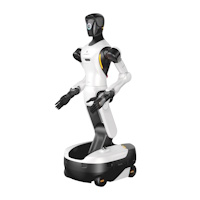
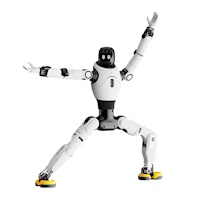
AIBotics' partnership documentation confirms two XMAN platforms for the Israeli and Middle Eastern market: the XMAN-R1 (wheeled humanoid for hotel, restaurant, hospital, and public space service) and the XMAN-F1 (bipedal humanoid for the same service application range). The broader AgiBot portfolio, including the A2 Ultra, G2, D1, X2, C5, and OmniHand Series, is available through AgiBot's global store for Middle Eastern and African buyers, with enterprise inquiry through agibot.com for deployment support.
What is the African AI opportunity that AgiBot's products could address?
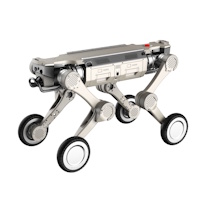
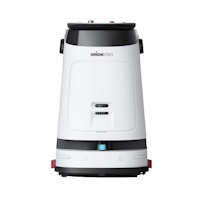
The Ai Everything MEA summit in Cairo, February 2026, cited AI's projected contribution of over USD $1.5 trillion to Africa's GDP by 2030. Egypt leads Africa in Government AI Readiness with a National AI Strategy 2025-2030. For AgiBot specifically, the most immediately applicable opportunities in Africa are hospitality and tourism service automation for hotel sectors in Cairo, Nairobi, Lagos, and Cape Town (A2 Ultra and X2), mining and energy infrastructure inspection for South Africa, Zambia, DRC, and Angola (D1 Ultra), and commercial facility cleaning for Africa's rapidly expanding retail and hospitality real estate (C5 autonomous cleaner).
How can Middle Eastern and African buyers purchase or access AgiBot robots?
Middle Eastern buyers can access AgiBot products through AIBotics for XMAN humanoid robots in Israel and the Middle East. All buyers can access the global portfolio through AgiBot's online store at store.agibot.com (direct purchase, international shipping). BotShare RaaS rental, covering 17 countries at a minimum of one day from EUR 899, may cover Middle Eastern and African markets; current availability should be confirmed through store.agibot.com. Enterprise and large-scale deployment inquiries for Middle Eastern organizations are handled by Abel Deng's Asia-Pacific and Middle East regional team through agibot.com.
What is AgiBot's strategic rationale for the Middle East as a priority region?
The Middle East is one of the world's fastest-growing AI and robotics investment destinations, with UAE and Saudi Arabia projected to invest approximately USD $100 billion annually by 2026 into AI-specific infrastructure. Saudi Arabia's Vision 2030 targets 150 million annual tourist visits by 2030, creating large-scale hospitality service automation demand directly addressed by AgiBot's A2 Ultra and X2 platforms. The UAE's technology ecosystem and Dubai's position as an international business hub provide both commercial hospitality deployment opportunities and institutional research and government partnership contexts for AgiBot's broader product portfolio. The region's leadership in sovereign AI development, including UAE's Falcon model and Saudi Arabia's HUMAIN alliance, signals a regional culture of AI investment that is receptive to physical AI deployment at commercial scale.